
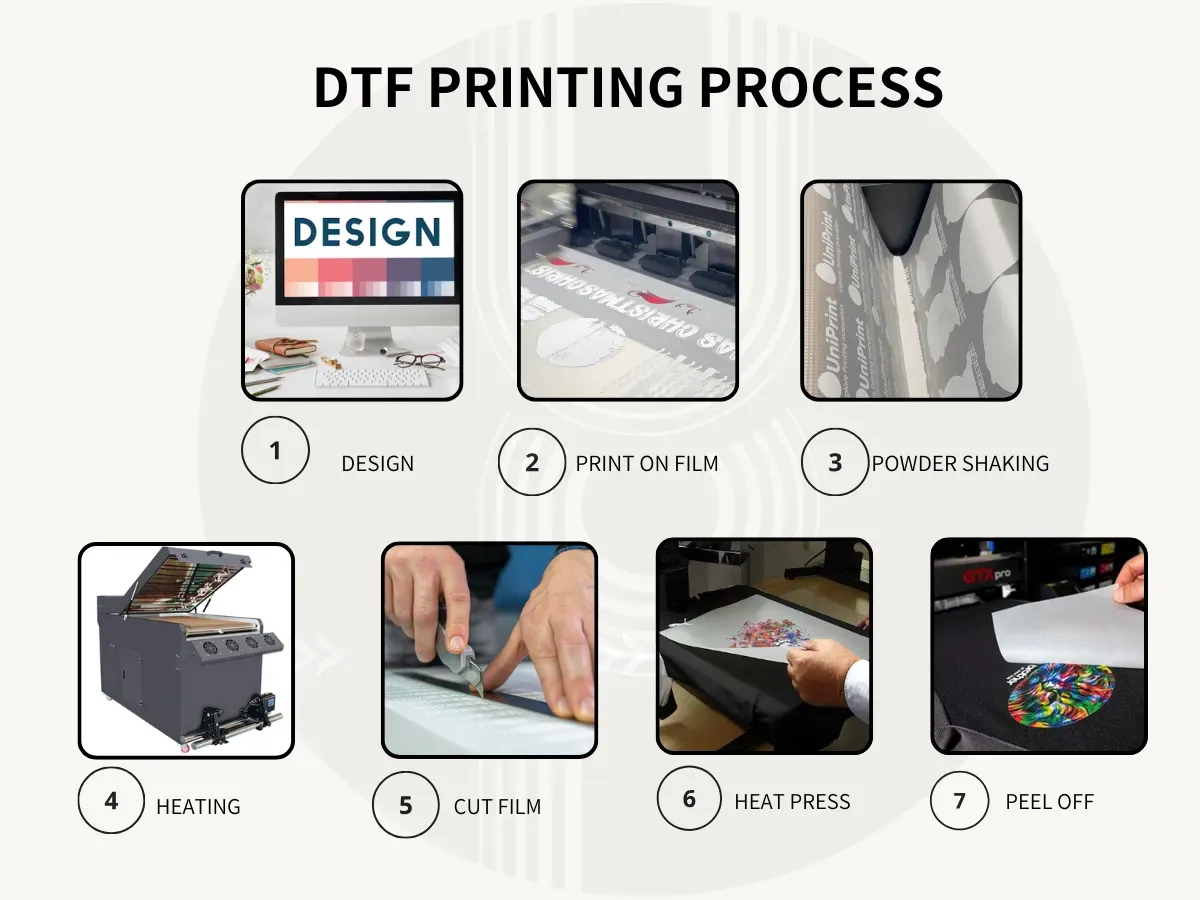
DTF Printing, short for Direct-To-Film printing, is transforming how brands decorate apparel and textiles. This approach blends digital film printing with a transfer method to produce vibrant designs that feel soft to the touch. If you’re evaluating transfer options for a growing shop, understanding equipment, costs, and best practices for this method is essential. From choosing the right DTF heat press to estimating DTF printing costs, you’ll find practical guidance for achieving reliable, color-rich results. This guide also covers DTF transfers and how direct-to-film printing stacks up against DTF vs screen printing and other methods.
Seen from a terminology angle, this method can be described as a film-based transfer workflow that uses pigment inks on a PET film to carry designs to fabric. In other words, it’s a direct-to-film technique, also called a PET-film transfer or a pigment-ink transfer process, optimized for soft hand-feel decorations. For e-commerce brands and small shops, the appeal lies in lower setup commitments and flexible color management compared with traditional methods. The approach integrates with heat-press workflows and digital color management to produce multi-color designs on cotton, blends, and select synthetics. Understanding the media, powders, and curing steps helps buyers compare options and plan costs more accurately.
DTF Printing Fundamentals: What Direct-To-Film Printing Delivers
DTF printing, also known as direct-to-film printing, empowers designers to create vibrant, full color transfers with a soft hand feel. By printing onto a PET film and curing with adhesive powder before pressing onto fabrics, it delivers durable color on a wide range of textiles including cotton blends and some synthetics. This approach is attractive for small shops and eCommerce sellers who want lower minimum orders and faster turnarounds.
As you consider whether to use DTF transfers, think about workflow efficiency, color management, and startup costs. DTF printing offers strong color reproduction and fewer post-print steps compared with some alternatives, while remaining adaptable for on demand and small batch production. Its versatility makes it easy to scale as orders grow.
Essential Equipment and Setup for a Smooth DTF Workflow
A starter DTF setup includes a printer compatible with pigment inks on film, a curing system, an adhesive powder system, a transfer film, a heat press, and RIP software. These components form the backbone of a reliable DTF printing workflow and influence results and throughput.
Investments in maintenance, cleaning supplies, and a proper working area matter as much as the main gear. Regular calibration, even powder application, and a clean environment reduce defects across DTF transfers.
DTF Transfers vs Alternatives: Why Direct-To-Film Printing Fits Many Shops
DTF transfers offer a flexible option when evaluating DTF printing costs, equipment, and design complexity. Compared to screen printing, DTF requires lower minimum quantities and easier color changes, while still delivering solid color fidelity on dark and light fabrics.
When comparing to DTG, DTF can handle a broader fabric mix and often delivers better color vibrancy on dark garments. The ROI shines when you offer on demand designs and small batches with a streamlined setup.
Optimizing DTF Heat Press Settings for Consistent Transfers
The DTF heat press is central to durable transfers. Temperature, platen pressure, and press time interact with fabric type and film quality to determine color fidelity and wash durability.
Use prescribed ranges from your equipment and ink manufacturers, then fine tune for common fabrics. A light pre press can reduce moisture, while a final post press helps set the design for long life.
Budgeting for DTF Printing: Costs, Materials, and Long Term Value
DTF printing costs include ink, powder, films, curing energy, and equipment depreciation. Planning a budget with recurring material costs helps prevent surprises as order volume grows.
Buying in bulk, negotiating with suppliers, and scaling gradually can improve per unit costs. Consider the total cost of ownership including maintenance licenses for RIP software and routine servicing.
Quality Control, Troubleshooting, and Best Practices for Consistent DTF Results
To achieve consistent DTF transfers, establish repeatable procedures for color management, film handling, powder application, and curing. Regular calibration checks help maintain alignment and color accuracy across batches.
Documenting settings, performing test washes, and running control garments are essential for diagnosing issues quickly. Common problems like fading colors, ghosting, or powder flaking respond to adjustments in heat, pressure, and cure time.
Frequently Asked Questions
What is DTF Printing and how do DTF transfers work?
DTF Printing, or direct-to-film printing, prints designs onto a PET film with pigment inks, applies adhesive powder, cures it, then presses the film onto fabric with a heat press. The result is a vibrant, durable transfer with a soft hand-feel that works well on cotton, blends, and some synthetics. This workflow is popular for small shops due to low minimums and quick turnarounds.
How do DTF printing costs compare to other transfer methods?
Costs include upfront equipment, ongoing ink and film purchases, adhesive powders, and energy use. Per-transfer costs depend on ink, film, powder, and curing time, but starting with a compact system can be affordable. Proper budgeting and scaling as orders grow help achieve a favorable ROI with DTF printing costs.
What equipment do I need for a reliable DTF heat press workflow?
A DTF printer with pigment inks, a print cure/drying system, an adhesive powder system with a curing unit, DTF transfer film, a heat press, RIP software and color management, plus cleaning supplies. Adequate ventilation and workspace planning improve safety and efficiency.
DTF vs screen printing: which is right for my shop?
DTF printing offers strong color reproduction, easy handling of complex designs, and low minimums—great for small runs and rapid iteration. Screen printing excels for large-volume runs and faster per-unit speed once set up. Consider order size, design complexity, and fabric variety when choosing.
How can I optimize DTF printing costs for small-batch orders?
Buy consumables like ink, film, and powders in bulk to lower unit costs, calibrate color profiles to minimize waste, and optimize curing and press settings to reduce energy use. Start with a compact setup and scale as demand grows to maintain favorable DTF printing costs.
What best practices ensure high-quality DTF transfers and how to troubleshoot common issues in direct-to-film printing?
Best practices include calibrating equipment regularly, ensuring even adhesive powder coverage, and optimizing heat and time settings for different fabrics. Troubleshoot issues by checking ink density, ensuring proper powder cure, keeping film surfaces clean, and verifying platen pressure. Always test on control garments and document results to reproduce successful transfers.
| Feature | Key Points |
|---|---|
| What is DTF Printing? |
|
| Workflow Overview |
|
| Essential Equipment |
|
| Materials & Supplies |
|
| Design & Preparation |
|
| Best Practices for Quality |
|
| Troubleshooting Common Issues |
|
| Costs, Budgeting, and ROI |
|
| DTF Printing vs Alternatives |
|
Summary
DTF Printing offers a flexible, scalable approach to garment decoration, blending digital pigment-ink printing on PET film with adhesive powder and heat-transfer technology. This descriptive overview summarizes the core concepts, equipment, workflow, materials, best practices, and common troubleshooting tips that enable shops to produce vibrant, durable transfers across fabrics. By focusing on reliable gear, thoughtful design preparation, and disciplined process controls, you can optimize quality, turn around times, and profitability with DTF Printing.