
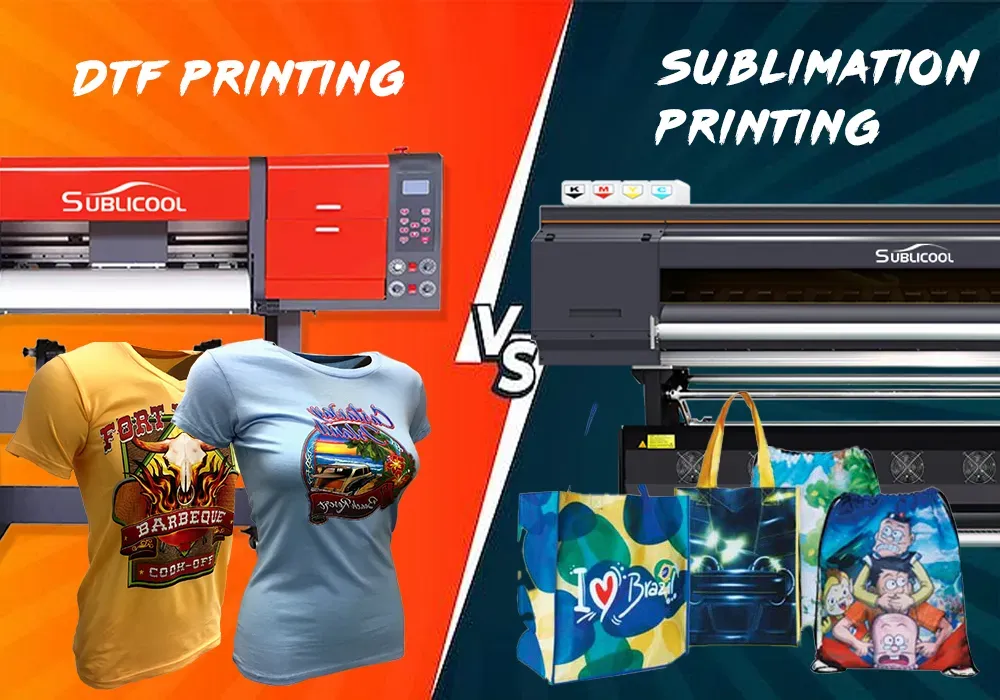
DTF vs Sublimation reveals a practical showdown for designers and print shops navigating quality, cost, and practicality. Understanding the core differences helps you pick the right process for cotton tees, blends, and performance fabrics, while leveraging direct-to-film printing where versatility matters. Sublimation on suitable polymers delivers bright colors and all-over potential, but it requires the right substrate to avoid muted tones. DTF can be flexible across many materials, but the choice often comes down to a clear fabric printing comparison when you balance workflow, durability, and cost. For teams evaluating production speed, finish, and longevity, the options offer distinct paths to reliable results across diverse garments.
In industry terms, two common fabric-decoration approaches dominate discussions: film-based transfers and dye-driven color applications. From a practical standpoint, success depends on substrate compatibility, color fidelity, wash durability, and the efficiency of the production workflow. Design teams and printers evaluate pre-treatment needs, ink chemistry, and curing steps, mapping how each method behaves on cotton, blends, or synthetics. Many shops adopt a hybrid strategy, reserving one technique for natural fibers and another for polyester to balance quality, speed, and cost at scale.
DTF vs Sublimation: Substrate versatility and fabric compatibility
DTF transfers are designed for versatility across substrates. Direct-to-film printing enables printing on cotton, blends, and many poly fabrics because the adhesive powder used during the transfer helps the image bond to a wide range of fibers. This makes DTF a practical option for mixed-fabric runs and designs with complex color, fine details, or light/dark palettes, and it fits a broader fabric printing comparison.
Sublimation, however, is substrate-limited to polymer-coated surfaces or fabrics with 60% polyester or higher. Cotton alone won’t hold sublimation dyes well unless a special coating is applied, so the fabric printing comparison often centers on polyester for saturation and all-over coverage. For shops serving both cotton and polyester, DTF can fill gaps where sublimation can’t perform as well.
Direct-to-film printing and sublimation: color accuracy and vibrancy across fabrics
Direct-to-film printing can deliver realistic color reproduction and sharp detail on a range of fabrics, supported by white underbase options for darker garments. When evaluating color accuracy, DTF printing advantages include faithful gradients and fine lines on cotton, blends, and select poly fabrics, though achieving the same saturation seen with polyester requires careful ink management.
Sublimation for fabrics yields bright, saturated color on polyester and poly-blends, with colors that can feel seamless and integrated into the fabric. From a fabric printing comparison perspective, color management, ICC profiles, and consistent heat are crucial to maintain vibrancy across panels and garments.
DTF printing advantages: why designers choose DTF for cotton blends
DTF printing advantages include strong color on dark fabrics, a robust white underbase, and compatibility with cotton, blends, and some poly fabrics. Designers appreciate the ability to print detailed artwork without separate screens, making small runs economical and fast to market.
With proper curing, the adhesive-based transfer can be durable and layer-friendly on cotton blends, reducing pre-treatment steps and expanding on-demand production. The versatility of DTF makes it a practical choice for brands that need flexible substrate options without sacrificing print quality.
Sublimation for fabrics: all-over prints on polyester with soft hand feel
Sublimation for fabrics shines when your substrate is polyester or polymer-coated; all-over prints can cover shirts, bags, and textiles with edge-to-edge color, creating a uniform look and a soft hand.
Because the dye becomes part of the fabric, the print hand feels natural and breathable, and wash durability on polyester is strong. This makes sublimation a favorite for athletic apparel and long runs on synthetic fabrics.
Fabric printing comparison: durability, hand feel, and wash performance
When choosing between DTF and sublimation, durability often depends on substrate, curing, and proper heat transfer. Sublimation typically yields excellent wash-fastness on polyester because the dye bonds at the fiber level, while DTF’s durability depends on complete curing, powder removal, and adhesive quality.
In terms of hand feel, sublimation embeds color into the fabric so it remains soft and breathable, whereas DTF transfers can feel slightly raised on some fabrics depending on the adhesive layer. The fabric printing comparison across cotton, blends, and poly shows different strengths: vivid color on cotton with DTF, vibrant saturation on polyester with sublimation.
Heat transfer on textiles: optimizing transfer quality across substrates
Key factors for successful heat transfer on textiles include temperature, dwell time, pressure, and even heat distribution. For DTF and film-transfer workflows, calibrating the press and ensuring uniform powder curing are essential to prevent cracking or delamination.
Color management and test runs across diverse fabrics help avoid edge cratering and color shifts. Whether you are using direct-to-film printing or sublimation, a consistent heat transfer strategy improves outcomes on cotton, blends, and polyester, supporting a reliable production timeline.
Frequently Asked Questions
DTF vs Sublimation: Which is better for cotton vs polyester fabrics?
DTF vs Sublimation: For cotton and blends, DTF offers versatile substrate compatibility and a strong underbase, making it a flexible choice for a range of tees and blends. Sublimation performs best on polyester or polymer-coated fabrics, delivering bright color on synthetic bases. Choose DTF when working with cotton or blends; choose sublimation for all-polyester or coated substrates, depending on your design goals.
What is direct-to-film printing and how does it compare to sublimation for fabrics?
Direct-to-film printing involves printing designs onto a clear film with pigment inks, applying adhesive powder, curing, and transferring to fabric with heat. It works on cotton, blends, and some poly fabrics, offering a white underbase and strong color on diverse substrates. Sublimation for fabrics uses dyes that bond with polyester fibers, delivering vibrant colors on 100% polyester or coated substrates.
DTF printing advantages: what makes DTF printing advantageous compared to sublimation?
DTF printing advantages include realistic color reproduction, strong vibrancy on dark fabrics, flexibility with blends, and easy handling of full-color artwork on a wide range of fabrics. It is well-suited for small-to-moderate runs and intricate designs. Sublimation excels in color saturation on polyester but is more substrate-limited, making DTF a better fit for varied fabrics.
Fabric printing comparison: when should I choose sublimation for all-over prints on polyester vs DTF for other fabrics?
In a fabric printing comparison, sublimation is the go-to for all-over prints on polyester, offering edge-to-edge coverage and a soft hand. DTF is preferable for cotton, blends, and fabrics where substrate flexibility and durable underbase are important. Consider your all-over print needs and substrate mix to decide.
Heat transfer on textiles: how do production economics and setup differ between DTF vs Sublimation?
DTF requires a pigment ink printer, film, adhesive powders, and a heat press, with ongoing consumable costs. Sublimation requires a sublimation-capable printer, sublimation inks, transfer paper, and a heat press. Both benefit from solid color management and careful curing; choose based on volume, fabric mix, and substrate compatibility to optimize cost and throughput.
Eco-friendliness and substrate limits: which method is more eco-friendly and how do substrate limitations influence DTF vs Sublimation?
Both methods have environmental considerations, including ink type, energy use, and waste from powders or paper. DTF offers broad substrate compatibility with cotton and blends, while sublimation is ideal for polyester and coated substrates. Evaluating your substrate usage and waste will help determine which method aligns with sustainability goals.
| Category | DTF Printing | Sublimation |
|---|---|---|
| Substrate compatibility | DTF: Cotton, blends, some poly fabrics | Sublimation: Best on polyester or polymer-coated surfaces; cotton needs coatings or blends |
| Color and vibrancy | DTF: Rich color on diverse fabrics; may require color management | Sublimation: Bright, saturated color on polyester |
| Hand feel | DTF: Transfers may feel slightly raised | Sublimation: Soft hand; dye-sub becomes part of fabric |
| Durability / wash | DTF: Durable with proper cure; depends on adhesive and powder | Sublimation: Excellent wash-fastness on polyester |
| All-over capability | DTF: Versatile; not inherently all-over; suitable for many designs | Sublimation: Ideal for all-over on polyester |
| Best use cases | DTF: Cotton tees, blends, mixed-fabric runs | Sublimation: All-over prints on polyester garments |
| Cost and setup | DTF: Ink, film, powders, heat press; ongoing consumables | Sublimation: Dye inks, transfer paper, heat press; volume-driven costs |
| Limitations | DTF: Substrate limitations; curing requirements; white underbase handling | Sublimation: Limited to polyester/coated surfaces; cotton requires coating |
Summary
DTF vs Sublimation: Choosing between these two fabric printing methods depends on substrate, design goals, production volume, and budget. DTF offers broad substrate compatibility, strong color potential on cotton and blends, and a flexible workflow suitable for mixed-fabric runs, with easy handling of detailed, full-color artwork. Sublimation delivers bright, durable color on polyester and coated surfaces, enables all-over prints with a soft hand, and shines in high-volume production. In practice, many shops benefit from a hybrid approach—DTF for cotton and blends and sublimation for polyester items—to maximize versatility and efficiency. When deciding, evaluate substrate mix, color requirements, durability expectations, and total throughput to select the best method for your brand. The future of fabric printing is likely to involve both technologies, enabling designers to push creative boundaries while meeting practical demands of cost, durability, and turnaround times.